
Designing a Farmhouse Kitchen with Modern Appliances
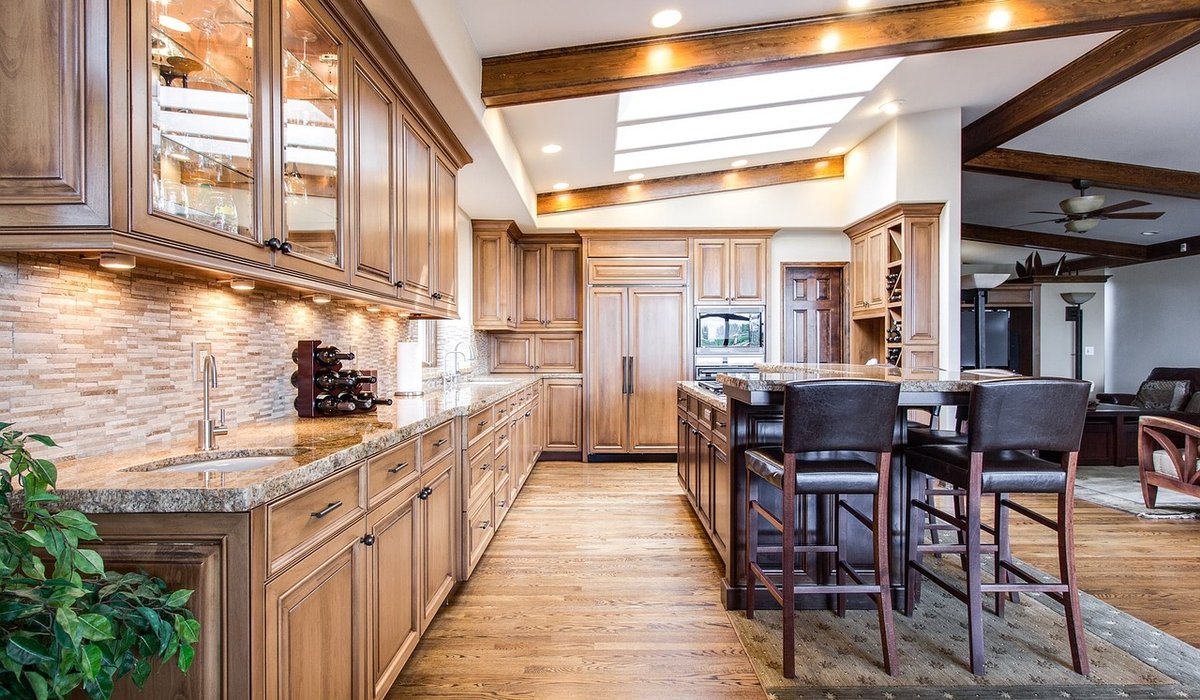
Start with the Room, Not the Showroom
A farmhouse kitchen is rarely a blank canvas. You are usually working with thick stone or brick walls, a floor that has settled over two centuries, low beams that catch you unawares, and a chimney breast that once served the original range. Before you look at a single oven, spend time understanding what the room already gives you — and where services can realistically run.
Get an electrician and a plumber in early, before the plaster goes back on. Old rural properties often have no cavity to hide cables, so runs need planning around beams and joists. If the walls are solid stone or brick, they will need to breathe; chasing deep slots into them for pipework can cause damp problems for years. Surface-mounted conduit in a matching colour is often the sensible compromise in a listed or period building.
Measure the practical things first: how far is the nearest external wall for extraction ducting, where does the soil stack run, and is there enough headroom under the beam above the sink? These constraints will shape the whole design far more than any mood board.
Materials That Improve with Use
The warmth of a farmhouse kitchen comes from materials that look better after a decade, not worse. Solid oak worktops, reclaimed flagstones, limestone, slate, quarry tiles and hand-made brick all earn their place. Pair them with painted timber cabinetry rather than glossy laminate, and the room will feel settled rather than staged.
Practicalities matter as much as looks:
- Solid oak worktops need oiling every three to six months. Around the sink, use a hard-wax oil or a small run of stone instead, because standing water will lift timber grain.
- Reclaimed flagstones should be sealed but never fully waterproofed if they sit over a breathable floor. Allow them to move with the seasons.
- Lime plaster or limewash on old walls handles moisture far better than modern vinyl silk, which traps damp and peels.
- Quarry tiles or brick slips make excellent splashbacks and cope with heat and splashes without fuss.
Keep one or two modern surfaces — a stainless splashback behind the hob, for instance — where easy cleaning genuinely wins.
Choosing Ovens and Hobs for Real Cooking
A traditional range cooker suits an old kitchen beautifully, but think about how you actually cook. Dual-fuel ranges give you gas or induction hobs with electric ovens, which is usually the best of both. A 90cm model is ample for most family kitchens; 110cm looks magnificent in a big room but eats into worktop space you may regret losing.
If there is no gas supply, induction is quick, safe and easy to wipe down. Two smaller built-in ovens often beat one large one — you can roast in one and bake in the other at different temperatures, which matters on Christmas Day. Allow a dedicated circuit for each high-powered appliance; a range cooker typically needs its own 32-amp supply, and an electrician will want to see that load accounted for in the consumer unit.
And leave room for the unglamorous kit: a microwave tucked into a tall unit, a toaster cupboard with a socket inside, and a clear stretch of worktop beside the hob for landing pans.
Dishwashers, Sinks and Water
Place the dishwasher within easy reach of the sink for scraping and rinsing, and choose a full-size 600mm integrated model with a furniture door if space allows. Slimline 450mm machines are useful in tight cottages, but only if you are not cooking for six every night. In hard-water areas — common across much of rural Britain — check the salt reservoir is easy to fill and keep it topped up, or limescale will dull your glasses within a year.
A butler sink looks the part and takes a roasting tin with ease, but it needs a generous base unit and a tap that reaches. Consider a boiling-water tap to save kettle clutter, and fit isolation valves on every supply so a leak can be stopped without draining the house.
If the property is on a septic tank or soakaway, be careful about pouring fats and heavy kitchen waste down the sink. A simple grease trap under the drain is cheap insurance.
Ventilation: The Bit Everyone Forgets
Old walls and steady cooking create condensation, and condensation in a solid-walled farmhouse leads to mould behind cupboards. Extraction is not optional.
- Duct to outside wherever possible. Recirculating filters move smells around the room rather than removing them.
- Position the hood roughly 600mm above a hob and 750mm above a range cooker, and match the extraction rate to the appliance — around 60 litres per second for a domestic hob.
- Keep ducting short, straight and wide. A 150mm rigid duct with one gentle bend outperforms a long, flexible 100mm run every time.
- Choose a quiet model. Anything above about 55 decibels at normal speed will stop you using it.
In a listed building, work with a conservation officer on discreet vent positions — a slate or tile vent can be almost invisible from outside.
Layout, Light and the Finishing Touches
Keep the classic working triangle — sink, hob, fridge — with no leg of it longer than about 1.2 metres. Allow 1.1 metres of clear walkway between an island and the run behind it so two people can pass without shuffling sideways.
Light in layers: pendants or a simple beam-mounted fitting over the table, warm 2700K bulbs throughout, and under-cabinet strip lighting along the worktops where you actually chop. Add plenty of sockets — at least six above the worktop — and make sure appliance isolators are reachable without pulling out a fridge.
Then stop. A farmhouse kitchen works best when it looks as though it has grown over time: a few open shelves, a well-used chopping board, a bunch of herbs on the windowsill. Get the oak, stone and ventilation right, and the room will carry the rest for the next thirty years.


Understand insulation options, draught proofing, heating controls, and renewable technologies suitable for solid-walled cottages and listed buildings in rural settings.
Learn how to prioritise structural repairs, source reclaimed materials, and phase work over time without compromising safety or long-term quality.
Ideas for incorporating old beams, floorboards, and scaffold boards into shelving, mantels, and furniture that add character to modern country rooms.
A practical guide to siting, lining, planting, and maintaining a small pond that attracts frogs, dragonflies, and birds to your outdoor space.